Check Winter Boiling Points and Safe Connection Before Using Camping Isobutane Canisters
Key Takeaway
In winter camping below 5°C, using threaded isobutane canisters instead of regular cassette butane is essential to maintain heat. Agencies warn that overheating canisters with open flames leads to severe explosions.
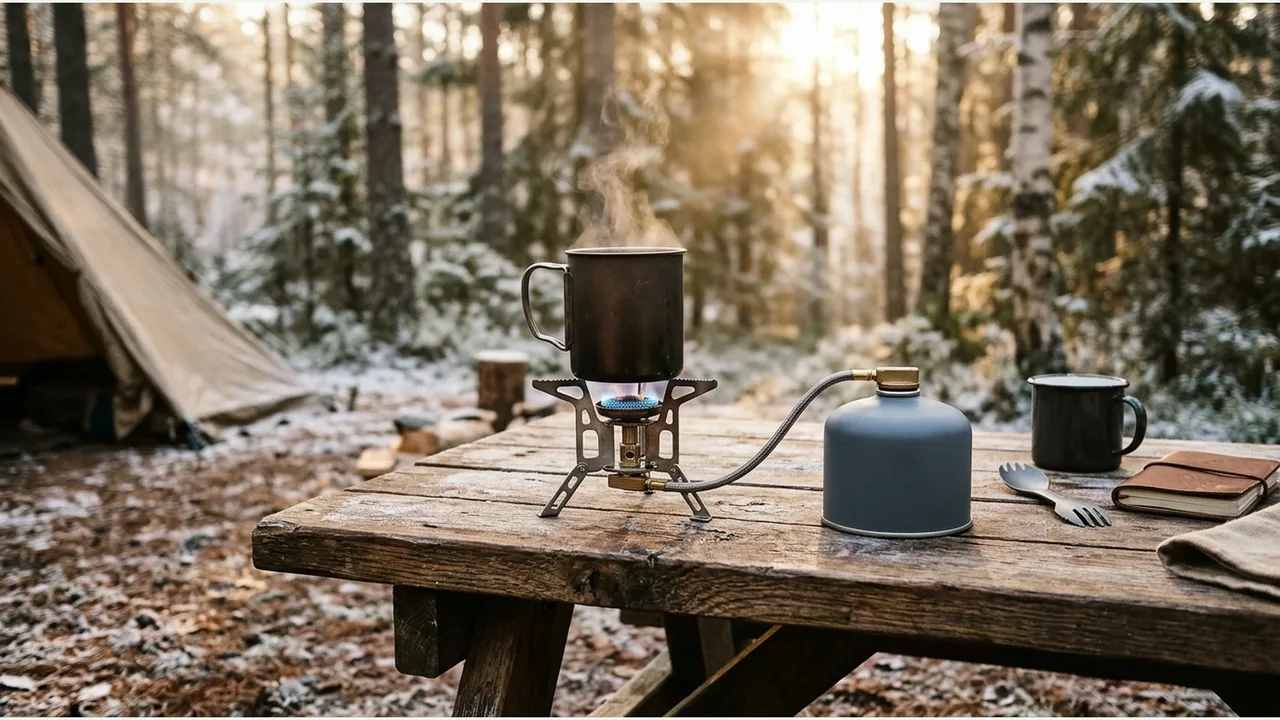
When a camping stove flame weakens and dies down outdoors, it is rarely a mechanical defect; rather, it stems from the chemical and physical characteristics of the fuel. Ensuring safe cooking in winter begins with understanding gas boiling points and following proper threading procedures for valve connections.
How do regular butane and isobutane differ in boiling points?
Liquefied gas packed into portable canisters primarily consists of normal butane (n-butane), isobutane, and propane. These components vary considerably in their boiling points, the temperature at which liquid converts into pressurized gas.
According to technical data from the Korea Gas Safety Corporation, normal butane has a boiling point of about -0.5°C. In contrast, isobutane, which features a branched molecular structure, boils at roughly -11.7°C, while propane boasts a low boiling point of -42.1°C.
| Gas Component | Boiling Point | Primary Canister Format | Winter Outdoor Characteristics |
|---|---|---|---|
| Normal Butane (n-Butane) | Approx. -0.5°C | Standard elongated canister (220g) | Vapor pressure drops sharply below 5–10°C; fails to vaporize below freezing |
| Isobutane (Iso-butane) | Approx. -11.7°C | Dome-shaped threaded canister (230g / 450g) | Maintains steady vaporization down to around -10°C; ideal for winter cooking |
| Propane (Propane) | Approx. -42.1°C | High-pressure steel cylinders or mixed additive | Vaporizes at extreme sub-zero temperatures; blended at 20–30% in alpine fuels |
Standard cassette butane cans widely sold in supermarkets are economical but filled primarily with n-butane. Even before temperatures fall below freezing, cool autumn air around 10°C causes internal gas pressure to slump, reducing heat output significantly.
Conversely, rounded dome canisters feature threaded Lindal valves and contain blends of 70% or more isobutane, often supplemented with 20% to 30% propane in four-season alpine mixtures, designed to sustain steady combustion in winter conditions.
Why does stove firepower collapse rapidly when temperatures drop?
When an outdoor stove is turned on, pressurized liquid inside the canister vaporizes into gas before combusting at the burner head. Liquid absorbing ambient thermal energy to evaporate is known as latent heat of vaporization.
As combustion continues, the liquid inside continuously draws heat from the canister walls, dropping the canister's physical temperature. During warm seasons, ambient air replenishes this heat easily. In cold weather, however, heat absorption rapidly pulls the container temperature below freezing.
This phenomenon, where ongoing burning freezes the canister and slumps internal pressure until the flame dies down, is termed the drop-down effect. Condensation turning into white frost on the outer metal surface signals that the interior liquid has dropped below the fuel's boiling threshold.
Preparing winter-rated isobutane canisters with low boiling points is the only reliable method to prevent drop-down power loss during cold weather expeditions.
What should you check when connecting a threaded isobutane canister?
Dome isobutane canisters employ standard Lindal threaded valves with a center valve pin. To ensure a safe, leak-free connection with stoves and remote hoses, follow these sequential checks:
- Inspect the rubber O-ring gasket. Inside the burner's female connection thread rests a small elastomeric ring that seals gas flow. If this gasket is cracked, torn, or hardened from cold exposure, gas can escape through micro-fissures upon connection.
- Align threads horizontally and screw on smoothly without forcing. Cross-threading by turning at an awkward angle can strip brass threads or warp the valve stem, causing irreversible leaks.
- Observe the momentary sound and smell. When rotating the canister into place, the depressor pin engages the valve, producing a brief, characteristic hissing noise. Hand-tightening smoothly until snug should stop the sound completely.
- If a hissing sound continues or an odor of gas mercaptan remains after tightening, immediately unscrew the canister and inspect the sealing surfaces in a well-ventilated outdoor area.
Attempting to mount cheap conversion adapters to connect standard elongated butane cans to threaded remote stoves introduces significant leakage risks. Using certified equipment and properly matched canister formats is paramount for safety.
What dangerous actions should be strictly avoided in winter?
When stove power drops in freezing weather, campers occasionally resort to dangerous expedients that risk catastrophic failure.
First, never apply a cigarette lighter, mini torch, or open flame directly to the base of a gas canister. Heating localized metal areas causes internal pressure to exceed burst thresholds within seconds, triggering sudden structural ruptures. Fire agency statistics confirm that direct heating is a dominant cause of severe camping gas explosions.
Second, avoid tightly wrapping disposable chemical hand warmers around canister walls with tape. Heavy-duty pocket warmers can peak near 70°C. Trapping heat within insulated sleeves or cozy wraps can push canister surface temperatures past the safe legal limit of 40°C.
Third, always detach the canister from the stove burner immediately after meal preparation. Leaving a mounted assembly inside a closed tent or vehicle overnight risks gradual leakage from micro-gaps, creating an explosive air-gas mixture susceptible to stray sparks.
Before departing for a campsite, verify that canister labels specify isobutane or winter performance, and inspect stove gaskets for signs of wear. A brief inspection before packing guarantees reliable warmth and safe outdoor cooking.
Product information
Candidates compared
-
Kovea Plate Burner Stainless
-
Kovea Container Stove
Product information is as of the date checked.
Frequently Asked Questions
Why does the flame go out when using regular butane gas in winter?
Regular butane (n-butane) has a boiling point of approximately -0.5°C, which causes its vaporization pressure to drop sharply when ambient temperatures reach around 5 to 10°C. Coupled with the drop-down effect where ongoing burning draws vaporization heat and cools the canister surface further, the gas fails to vaporize, causing the flame to dwindle or extinguish.
Can I heat the bottom of a cold canister with a lighter to boost the flame?
You must never do this. Applying direct flame to the lower section of a canister causes localized internal pressure to surge dramatically, risking a violent explosion. Taping hot packs directly against the canister is also dangerous due to trapped heat, so switching to rated winter-grade isobutane is the only safe solution.
Is a brief hissing sound defective when threading on an isobutane canister?
A momentary, brief hissing sound as the pin engages the valve during threading is a normal part of the connection process. However, if the hissing persists after fully hand-tightening or if you smell gas odor, the rubber O-ring gasket may be damaged or the threads cross-threaded, requiring immediate disconnection in an open area.
Sources & Verification Date
- Korea Gas Safety Corporation Portable Gas Stove Canister Safety Guidelines and Winter Gas Safety · Verified
- Korea Consumer Agency Winter Camping Heating and Fire Safety Advisory · Verified
- National Fire Agency and Ministry of the Interior and Safety Campsite Fire Safety Rules (Korea Policy Briefing) · Verified
All materials have been verified from official announcements and may have changed since verification.