Find Out Why Using Two Portable Gas Stoves Side by Side Is Dangerous
This page contains Coupang Partners affiliate links; the operator may earn a commission.
Key Takeaway
Heat can reach the butane canister of the inner unit between two stoves placed together, and it can explode. Official guidance says not to place two or more portable gas stoves together or connect them.
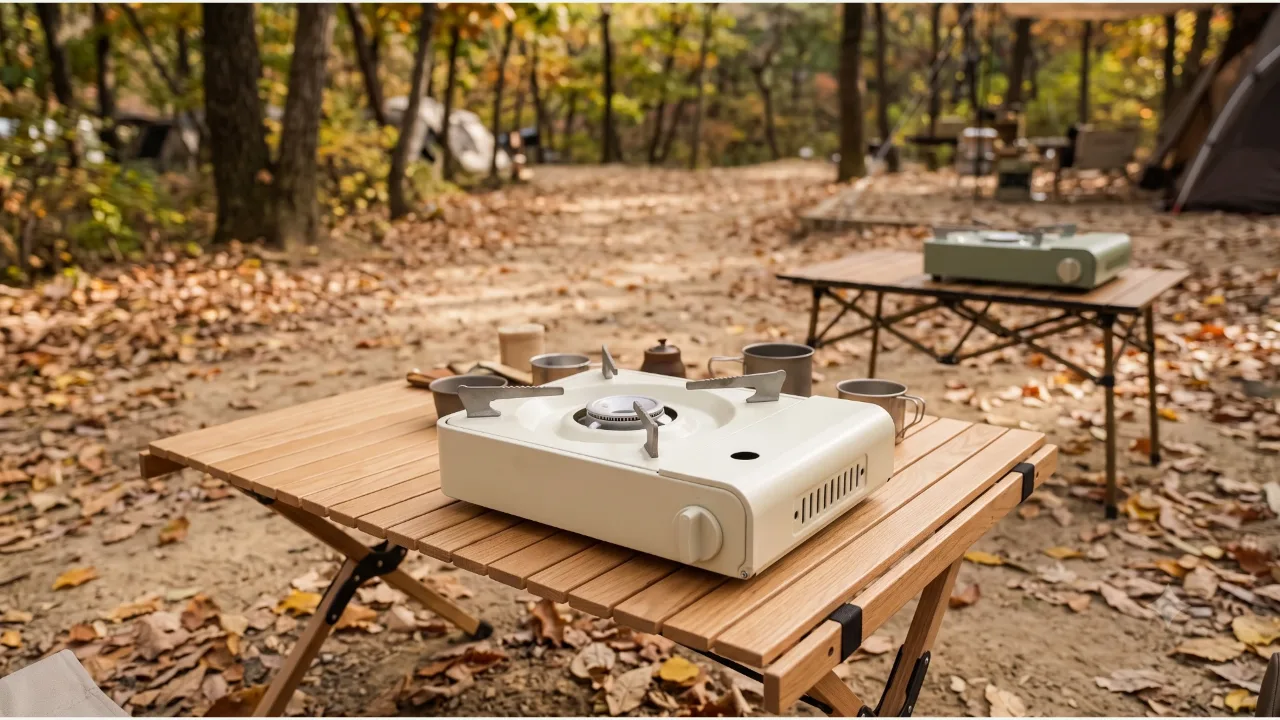
Where does the danger come from when two are placed together?
The "Butane gas accident safety white paper" on Safe TV of the Ministry of the Interior and Safety (posted November 25, 2015) lists using two portable gas stoves together as one cause of butane gas accidents. The commentary says that in this setup, heat reaches the butane gas on the inner side and it may explode.
A portable gas stove is an appliance with a butane canister loaded inside the body. Even one lit unit sends up heat from the flame and the hot cookware. If you place another appliance against it, the inner canister is squeezed between the two units, and that is exactly the spot Safe TV points to. At this point, the broadcast adds no explanation about radiant heat or pressure, and says only that heat is applied.
How do official sources advise on using two units?
Put side by side, the two agencies' guidance looks like this.
| Agency | Source | Guidance on using two units |
|---|---|---|
| Safe TV, Ministry of the Interior and Safety | Butane gas accident safety white paper (2015-11-25) | Do not use two or more portable gas stoves together |
| National Fire Agency | Press release (2019-06-20) | Do not connect two portable gas burners for use, and do not use a grill plate larger than the gas burner |
The wording differs slightly. Safe TV speaks of using units "together" and the National Fire Agency of using them "connected." Neither spells out a condition for placing them separately, so it fits the guidance best to read any way of using two units as one block, whether placed together or connected, as the same category.
The Safe TV broadcast begins with a September 7, 2014 incident in Gangseo District, Seoul, where a family preparing Chuseok food suffered a serious accident from a butane gas explosion fire on a portable gas stove. It then lists four accident causes: putting a pot or grill plate larger than the trivet on for a long time and overheating the canister, leaving the spot while it is in use, using two gas stoves together, and keeping a used-up canister near open flame. The part of the broadcast on a campsite accident in Ganghwa Island is about using gas products inside a tent, so this article does not go into it.
In June 2019, the National Fire Agency said that over the previous five years (2014 to 2018), butane gas explosions during portable gas burner use averaged 111 a year, and casualties averaged 27 people a year (2.4 deaths and 24.6 injuries). The first item among the agency's rules for preventing explosions is not connecting two burners. But the press release has no separate explanation attached to that item alone.
What should you check before setting one down?
Pulling out only the items in the two sources related to using two units gives the table below.
| Area | What to check | Source |
|---|---|---|
| Placement | That two units are not placed together or connected | Safe TV, National Fire Agency |
| Cookware size | That no pot or grill plate wider than the trivet is on it. Do not use a grill plate larger than the appliance | Safe TV, National Fire Agency |
| Aluminum foil | That you are not laying or covering with foil | Safe TV |
| Staying | That you do not leave while it is lit | Safe TV |
| Flame and smell | If you notice an odd flame or a gas smell, stop using it and follow the manual's inspection guidance | Safe TV |
Leaving the spot and oversized cookware are accident causes that apply with one unit too. Read the table keeping in mind that placing two units side by side can pile these causes up in one place.
Neither source gives a distance that counts as safe. So even if you set a gap of some centimeters, there is no basis to treat that as following the guidance not to use them together. Storage temperature and disposing of used cans are separate topics and are not covered here.
Who needs this guidance?
It applies to anyone short of burners who wants to pull out one more unit and put it next to the first. As the Safe TV starting case was holiday food preparation, this is not only a campsite matter. A typical case is a large gathering where someone wants to put a grill pan and a stew pot on at the same time.
By contrast, someone who sets out just one unit and cooks in turn with cookware sized for the appliance is not caught by this item. Still, if you put on a large grill plate, you fall under the cookware size row in the table above, so it is worth checking.
What if you do not have enough burners?
The two sources do not give a permitted layout. What the guidance lets you read stops at using one unit at a time. Putting cookware sized for one unit on it, staying by that unit, and cooking the next dish after turning off the earlier flame comes closest to the guidance.
When choosing a new appliance, look at the detailed description on the maker's official page to see whether the support (trivet) size and the standard for cookware you can put on it are stated. The two products behind the product buttons below had their names confirmed on the maker's official page, and heating power and safety device specs were not confirmed in the page text, so decide after looking at the detail images or the maker's customer service guidance.
| Candidate | What was confirmed in the maker's official shop | Extra checks before buying |
|---|---|---|
| Kovea Container Stove Black | Gas burner and camping burner product name, and black color | Permitted cookware size, where it is used, how the canister is loaded |
| Kovea Plate Burner | Gas burner and camping burner product name | Permitted cookware size, where it is used, how the canister is loaded |
Checked in Kovea's official shop on 2026-10-08. This is not a comparison for using the two candidates side by side. After confirming the conditions the manual allows, use one at a time, and check price and stock on the link.
Before you light anything, look first for an appliance placed next to yours, and if there is one, move it away first.
Product information
Candidates compared
-
Kovea Container Stove Black
-
Kovea Plate Burner
Check price and stock at the link. Product information is as of the date checked.
Frequently Asked Questions
Is it fine to put two side by side if I leave a gap?
Safe TV of the Ministry of the Interior and Safety says not to use two or more portable gas stoves together, and the National Fire Agency says not to connect two gas burners. Neither source gives a number such as a few centimeters or meters of gap that would be acceptable.
Is putting a big grill plate or foil on top the same kind of risk?
Safe TV of the Ministry of the Interior and Safety lists putting a pot or grill plate larger than the trivet on for a long time and overheating the canister as an accident cause, and also advises against aluminum foil. The National Fire Agency says not to use a grill plate larger than the gas burner.
How many accidents came from using two together?
The National Fire Agency said portable gas burner butane explosions averaged 111 a year and casualties averaged 27 people a year from 2014 to 2018. No separate count of accidents from joining two units could be found in these figures.
Sources & Verification Date
- Butane gas accident safety white paper (Safe TV, Ministry of the Interior and Safety, Our Family Safety White Paper, 2015-11-25) · Verified
- Beware of butane gas explosions when using portable gas burners (National Fire Agency press release, 2019-06-20) · Verified
All materials have been verified from official announcements and may have changed since verification.