Tell Glamping Tent Flame-Retardant Rules Apart From Personal Tents
This page contains Coupang Partners affiliate links; the operator may earn a commission.
Key Takeaway
Glamping-style tents that an operator sets up and provides must meet flame-retardant performance standards (Annex 7, Item 1(ma), amended December 29, 2025). Do not read it as a duty for visitors' own tents.
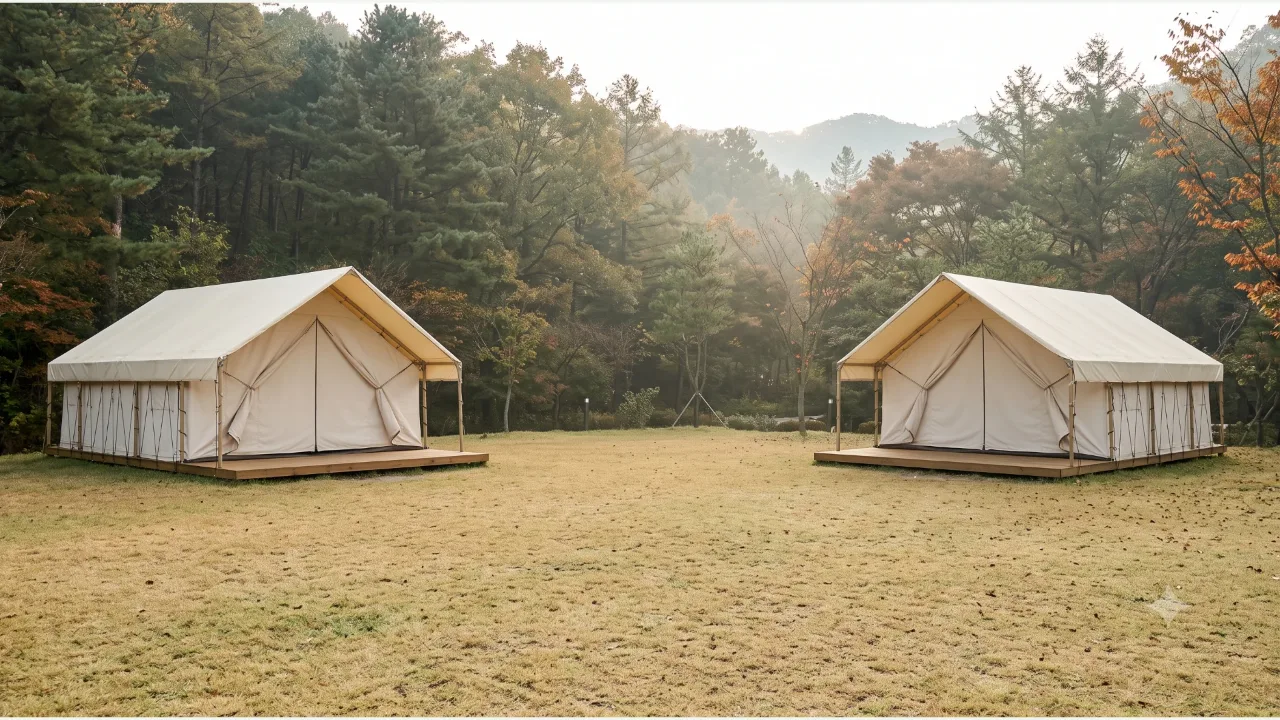
How did the flame-retardant standard for glamping tents change?
In its March 4, 2019 press release "Campground fire safety and hygiene standards to be strengthened," the Ministry of Culture, Sports and Tourism explained the introduction of the flame-retardant duty. In the table at the time, the exception that had applied to glamping tents with a structure that is easy to escape from was removed and flame-retardant performance standards were applied. It gave the transitional period as 2 years.
The body text says much the same. Previously, there was no duty to treat glamping tents as flame retardant and no distance standard between facilities, so there was a concern that damage would spread in a fire. With the amendment, tents must use products that meet the flame-retardant performance standards under the "Act on Fire Prevention, Installation, Maintenance and Safety Control of Fire-Fighting Systems."
The same table lists, along with flame retardancy, a distance of at least 3 meters between campground facilities, installation of carbon monoxide alarms, and a ban on using wood stoves and similar. The transitional period is 2 years for the distance standard and 1 year for the alarms and stove ban. It can be read as a bundle meant to keep a fire in one tent from spreading to the facility next to it.
The transitional measures and the act's name above are the standards at the time of introduction in 2019. When I checked the current annex on 2026-10-08, the flame-retardant performance standard follows Article 20(3) of the "Act on Installation and Management of Fire-Fighting Systems." Do not apply the old act name and grace period as if they were the current rules.
Whose tents does this standard apply to?
The current Annex 7, Item 1(ra)1) defines a campground facility whose main material is canvas, with a foundation and posts on the floor, installed on the ground. The flame-retardant standard in Item 1(ma) applies when the operator sets up that facility and provides it to guests. That is why it is not lumped together with portable tents that individuals bring and pitch.
The Ministry of Culture, Sports and Tourism's May 2019 article on the Policy Briefing contains one example showing this distinction. When setting the duty to install carbon monoxide alarms, it first considered covering even personal tents, but in the end narrowed the scope to facilities operators provide, such as glamping. That is about alarms, so it cannot be carried over to flame retardancy as is. Still, it is worth noting that in the same period and the same amendment, the government sized the duty to operator-provided facilities. The same article also mentions support for replacing glamping facilities' tents with flame-retardant ones.
How do you check for flame-retardant tents before booking?
You cannot tell whether a tent is flame retardant from its color or thickness. If the booking page has no evidence, ask the operator whether the tent meets the flame-retardant performance standard and what documents can confirm it. The table below is organized to the scope of the current annex.
| Area | What to check | Source |
|---|---|---|
| Tents and similar facilities the operator provides | Whether they meet flame-retardant performance standards, and whether emergency escape through the entrance is easy | Annex 7, Item 1(ma) |
| Between the operator-provided facilities | Whether the distance is at least 3 meters | Annex 7, Item 1(ba) |
| Inside the operator-provided facilities | Whether wood stoves and pellet stoves are not installed and used | Annex 7, Item 1(sa) |
| A personal tent you bring | Treat as separate from the operator-provided facilities in the flame-retardant clause. Check the campground's rules and the product manual | Annex 7, Item 1(na) and (ma) |
There is also a standard in Annex 7, Item 5(ma) on preventing walking inconvenience that concerns the distance between personal tents. It is separate from the 3 meter standard for operator-provided facilities. Flame retardancy does not replace escape routes or facility layout, and it does not mean open flame is allowed with flame-retardant products.
What should you look at when choosing a personal tent?
For a personal tent, check the material and conditions of use in the product manual. If the product description says flame retardant or fire resistant, ask the seller for the standard it meets and the supporting documents. Do not judge a product to be flame retardant from the material description alone.
| Personal tent candidate | Structure and setup guidance confirmed in the maker's official shop | Flame-retardant judgment |
|---|---|---|
| Kovea Nest W (Tan) | Cross structure, setup by 2 or more people recommended | No evidence of meeting flame-retardant performance standards confirmed in the official shop text |
| Kovea Nest T (Tan) | T-shaped structure, setup by 2 or more people recommended | No evidence of meeting flame-retardant performance standards confirmed in the official shop text |
Checked in Kovea's official shop on 2026-10-08. These candidates are for comparing personal tents and are not a table recommending flame-retardant products for glamping facilities. Follow the setup guidance for both models and check price and stock with the seller.
The people who should read this carefully are those planning to book a glamping facility. If you only use your own tent, it is enough to know that this standard is not a rule that directly applies to your gear. Even if you bought a tent with a flame-retardant label, check separately on the sales page what the label is based on.
What should you ask the operator before booking?
When you book glamping, look at the information page first, and if it does not say whether flame-retardant tents are used, a one-line question by phone or on the inquiry board is enough. Keep the wording short. For example: "Do the tents in your rooms meet the flame-retardant performance standard under fire safety laws? Is the spacing between campground facilities at least 3 meters?"
Record the answer, and when you arrive, check the tent entrance and the evacuation route. For a personal tent, follow the product manual and the campground safety rules, and if the product name says flame retardant, check the supporting documents. Laws can change, so also check the current annex at the Korea Law Information Center when you book.
Product information
Candidates compared
-
Kovea Nest W (Tan)
-
Kovea Nest T (Tan)
Check price and stock at the link. Product information is as of the date checked.
Frequently Asked Questions
Does a personal tent need flame-retardant treatment too?
Annex 7, Item 1(ma) of the Enforcement Rule of the Tourism Promotion Act, as amended on December 29, 2025, covers tents and similar campground facilities that a business sets up and provides to visitors. Do not stretch this clause into a flame-retardant duty for personal tents that visitors bring. Personal tents still have to follow campground safety rules such as the ban on fire use.
When did the flame-retardant duty for glamping tents take effect?
The Ministry of Culture, Sports and Tourism's 2019 press release describes the duty at the time and a 2-year transitional period. I confirmed the current standard from the Annex 7 amended on December 29, 2025, and do not treat the old grace period as if it still applies.
What else changed in the same amendment besides flame retardancy?
The current Annex 7 has a distance of at least 3 meters between the facilities an operator provides, installation of extinguishers, smoke detectors, and carbon monoxide alarms, and a ban on installing and using wood stoves and pellet stoves inside. It is not a clause that applies the same 3 meter figure across all personal tents.
Sources & Verification Date
- Annex 7 of the Enforcement Rule of the Tourism Promotion Act: safety and hygiene standards for campgrounds (Korea Law Information Center, amended 2025-12-29) · Verified
- Campground fire safety and hygiene standards to be strengthened (Ministry of Culture, Sports and Tourism press release 2019-03-04) · Verified
- Mandatory carbon monoxide alarms and a safer camping environment (Ministry of Culture, Sports and Tourism, Policy Briefing 2019-05-10) · Verified
All materials have been verified from official announcements and may have changed since verification.