Check the Forecast and Low Temperature Before a Winter Camping Trip
This page contains Coupang Partners affiliate links; the operator may earn a commission.
Key Takeaway
The National Fire Agency calls a weather check before camping a must, naming rain chance and low temperature. Check the forecast low and any warnings twice, the day before and on departure morning.
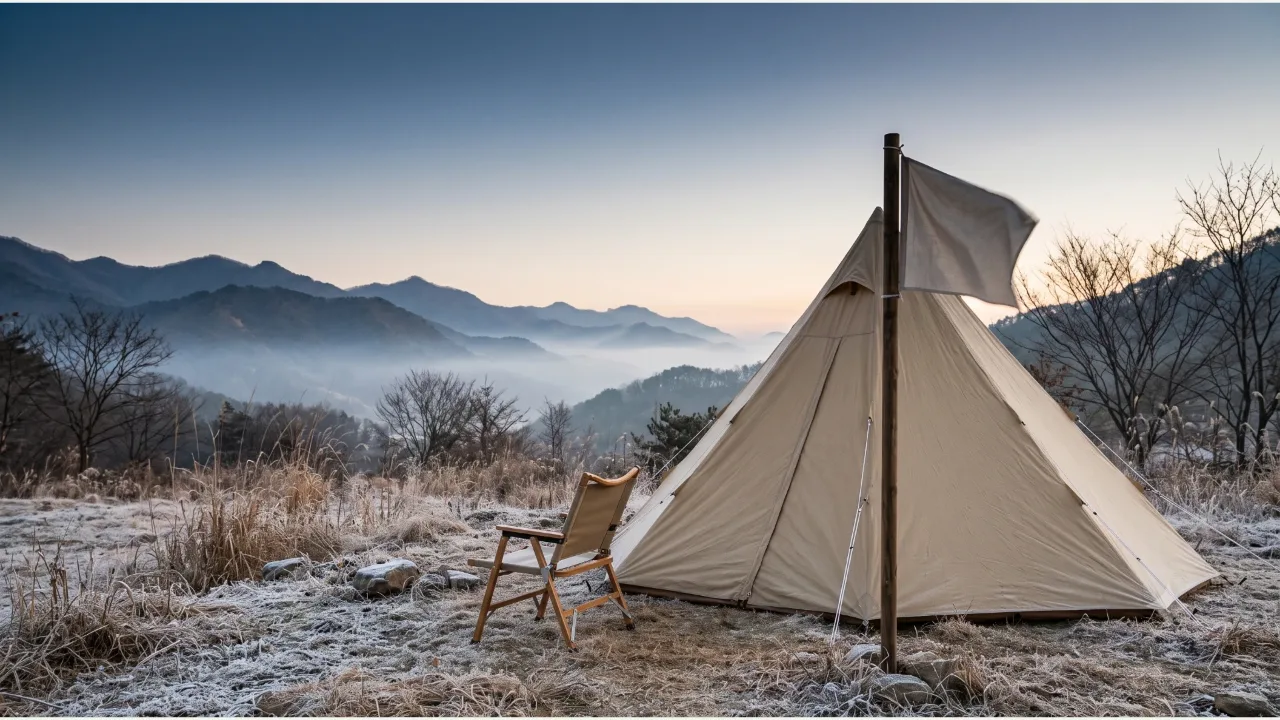
What does the National Fire Agency say to check before leaving?
"Seven safety rules for a smart camping life," which the National Fire Agency posted to the Policy Briefing on March 27, 2024, says "checking the weather before going camping is a must." It names rain chance and low temperature as the items to check. The same article adds that it gets chilly after sunset, so take particular care with fire and heating appliances.
That article is about spring camping. It is not a winter-specific standard, and it has no figure for what temperature becomes dangerous. So do not read it as saying a sleeping bag or heating gear guarantees safety; take from it only the principle of checking the weather before you leave.
What criteria do cold wave, strong wind, and heavy snow warnings use?
I moved the issuance criteria laid out on the KMA forecast services page into the table below. All are criteria for when conditions are expected, and some figures differ by region and mountain area.
| Warning | Advisory | Warning (severe) |
|---|---|---|
| Cold wave (October to April) | When the morning low falls 10°C or more from the previous day to 3°C or below and is 3°C or more below normal, or when -12°C or below lasts 2 days or more | When it falls 15°C or more from the previous day to 3°C or below and is 3°C or more below normal, or when -15°C or below lasts 2 days or more |
| Strong wind (land) | Wind speed 14 m/s or more, or gusts 20 m/s or more. In mountain areas, 17 m/s or 25 m/s or more | Wind speed 21 m/s or more, or gusts 26 m/s or more. In mountain areas, 24 m/s or 30 m/s or more |
| Heavy snow | New snow accumulation of 5 cm or more in 24 hours | New snow accumulation of 20 cm or more in 24 hours. In mountain areas, 30 cm or more |
I checked the KMA page on 2026-10-10. The page did not state an update date. Criteria can change, so check the current criteria on the KMA before you leave.
Can you assume it is fine if there is no warning?
You should not read it that way. A cold wave advisory is issued under set conditions, such as when the low stays at -12°C or below for two days or drops sharply in a day. Cold below the warning criteria can still be dangerous outdoors, and these criteria are not a line that judges the safety of a campground.
On the other hand, I also did not find any official source saying it is fine to go because conditions are below the warning criteria. Use a warning as a signal to change your plans, and when there is none, read the forecast low, the wind, and the snow forecast and judge for yourself. If it is hard to judge, leave the option of postponing open.
What should you do about camping in strong wind?
The KMA Weather Nuri public action guide for strong wind advises clearing away or bringing inside outdoor objects that could blow away before the wind comes, and refraining from outdoor activity when it blows. It also says to stay away from under trees and utility poles. This page has nothing about tents or camping. How to set up and take down a tent is outside the scope of this article, so follow the product manual and the campground's guidance.
The strong wind advisory criterion is when land wind speed of 14 m/s or more, or gusts of 20 m/s or more, are expected. If the forecast wind gets close to these figures, it is better to first consider postponing than to think about how to secure your gear.
Where do you check a sleeping bag's rating to match against the forecast low?
After checking the forecast low, look at whether the sleeping bag you will bring has a usage temperature stated by the maker. On 2026-10-10, I checked two products listed as sleeping bags in Montbell Korea's official shop.
| Product | What was confirmed on the official page | What to check separately before matching to the forecast |
|---|---|---|
| Montbell Seamless Burrow Bag #3 RED ORANGE | Product name, color, size option name | The usage temperature stated and its basis, fill, weight, size |
| Montbell Down Hugger 650 #1 LONG ORANGE | Product name, color, size option name | The usage temperature stated and its basis, fill, weight, size |
The text area of both product pages did not show usage temperature, fill, weight, or dimensions. So this article does not say which product suits which temperature. A stated usage temperature is a value the company set, so do not read it as a number that guarantees safety, and judge with a margin below the forecast low. If it is not stated, ask the seller, and check price and stock on the links as of the check date.
This table is for people preparing a new sleeping bag. If you already have one, look at that product's label and manual first.
What should you check the day before and on the day?
Here it is in time order.
- The day before leaving, check the rain chance and low temperature forecast for your destination, and see whether cold wave, strong wind, or heavy snow warnings have been issued.
- On the morning of departure, check again whether the forecast has changed.
- After arrival, before sunset, review your plan for using fire and heating appliances. This is the point where the National Fire Agency said it gets chilly after sunset.
- If the forecast gets worse, shorten or postpone the trip.
Bodily symptoms such as hypothermia and frostbite and how to respond in an emergency are covered in the article "Prevent Hypothermia and Frostbite on Winter Camping Trips." This article covers only the weather check that decides whether to leave.
Product information
Candidates compared
-
Montbell Seamless Burrow Bag #3 RED ORANGE
-
Montbell Down Hugger 650 #1 LONG JBEFXUZB151
Check price and stock at the link. Product information is as of the date checked.
Frequently Asked Questions
Is it safe to go winter camping if there is no cold wave warning?
A cold wave warning is issued based on changes in the morning low or how long it lasts, and it is not a standard that guarantees the safety of a particular campground. The National Fire Agency advises checking the rain chance and low temperature before leaving and does not speak to whether a warning is in effect. Even with no warning, read the forecast low, the wind, and the snow forecast together to judge your plans.
When does the KMA issue cold wave warnings?
The Korea Meteorological Administration forecast services page says cold wave warnings are issued during the period from October to April. I checked this page on 2026-10-10. Criteria can be revised, so look at the KMA page again before you leave.
What should I do about the tent on a windy day?
The KMA Weather Nuri public action guide for strong wind advises refraining from outdoor activity and does not cover tents or camping separately. The strong wind warning criterion is when land wind speed of 14 m/s or more, or gusts of 20 m/s or more, are expected. If the forecast wind speed is close to that, first consider postponing.
Sources & Verification Date
- Seven safety rules for a smart camping life (National Fire Agency, Policy Briefing 2024-03-27) · Verified
- Weather information and warnings (Korea Meteorological Administration forecast services, cold wave, strong wind, and heavy snow warning criteria) · Verified
- Public action guide for strong wind (Korea Meteorological Administration Weather Nuri) · Verified
All materials have been verified from official announcements and may have changed since verification.